
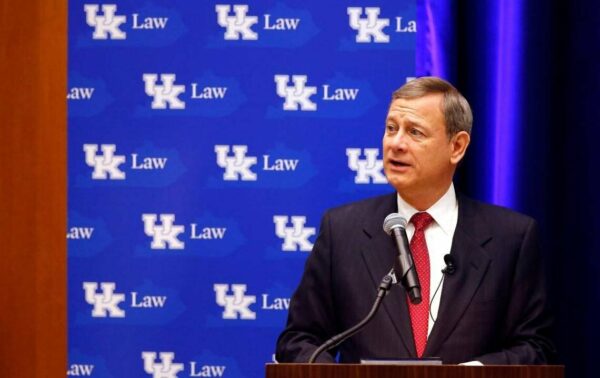
Chief Justice John G. Roberts Jr. on Tuesday reportedly granted the Trump administration’s emergency request to temporarily maintain a freeze on nearly $5 billion in foreign aid, a decision that strengthens President Donald J. Trump’s long-running effort to rein in Washington’s overseas spending.
The order blocks a lower-court ruling that said the president’s action was likely unlawful and signals that the Supreme Court may ultimately side with the administration.
The decision preserves, for now, Mr. Trump’s plan to keep $4.9 billion in congressionally approved aid from leaving the Treasury.
Mr. Trump, who has made sharp reductions to foreign aid a hallmark of his administration, invoked a rarely used budget maneuver last month to prevent the money from being spent. In an Aug. 28 letter to Speaker Mike Johnson, Republican of Louisiana, the president said he would not release the aid.
The maneuver, known as a “pocket rescission,” allows a president to submit a late request to Congress near the end of a budget year not to spend approved funds.
Because Congress must respond within 45 days and the deadline has effectively expired, the funds lapse unused. The tactic has not been invoked in roughly half a century.
The administration has defended the freeze as a matter of both fiscal discipline and national priorities.
Supporters argue that pouring billions into foreign governments and aid projects abroad does little to address the urgent crises at home, including violent crime, strained borders, and growing debt.
Critics, including U.S. District Judge Amir Ali, ruled last week that such a move required explicit congressional approval. Judge Ali said the Constitution gave Congress, not the executive branch, the power of the purse. A federal appellate panel declined to block his ruling, prompting the administration to turn quickly to the Supreme Court.
Chief Justice Roberts’ decision on Tuesday keeps the president’s policy in place while the justices deliberate further. Though temporary, the order suggests the Court’s conservative majority may be open to siding with the White House, especially given the long history of executive leeway in foreign affairs and budget execution.
For Mr. Trump, the ruling represents another step in his challenge to entrenched spending patterns that have long been insulated from public scrutiny. He has argued that the United States cannot continue to write blank checks overseas while working families face mounting costs at home. “America first” has been the defining theme of his foreign policy, and restraining foreign aid has been central to that agenda.
The White House has acknowledged that the $5 billion freeze represents only modest savings relative to the federal deficit. But officials emphasize that the issue is not just about dollars and cents. It is about priorities. With billions flowing abroad, they argue, taxpayers are rightly questioning why their money is not being used to address immediate domestic needs.
The justices are expected to weigh in more fully in the coming weeks. For now, Chief Justice Roberts’ order gives the administration the ability to press ahead with a policy that has divided Washington but remains popular with voters skeptical of unchecked foreign aid.
[READ MORE: Supreme Court Eases Limits on Immigration Raids in Los Angeles]