
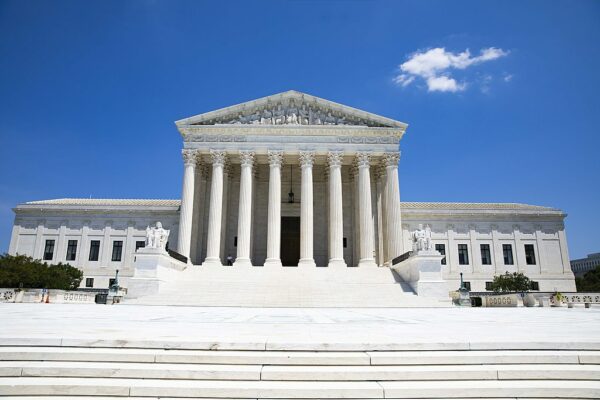
In a major ruling that underscores the ongoing tension between government regulation and individual liberties, the Supreme Court on Tuesday sided with a Christian counselor challenging Colorado’s ban on certain counseling practices involving minors.
The decision, authored by Justice Neil Gorsuch and backed by an 8-1 majority, found that lower courts applied too lenient a standard when upholding the state’s law.
At the heart of the case is a 2019 Colorado statute that prohibits licensed mental health counselors from engaging in practices aimed at changing a minor’s sexual orientation or gender identity—commonly referred to by critics as “conversion therapy.” Violations of the law can result in fines of up to $5,000, along with the suspension or revocation of a counselor’s license.
Kaley Chiles, a Colorado-based Christian counselor, challenged the law on First Amendment grounds, arguing that it unlawfully restricts her speech with clients and suppresses viewpoints rooted in her religious beliefs.
Lower courts had previously sided with the state, determining that the law governed professional conduct rather than speech.
But the Supreme Court disagreed, concluding that the law does in fact regulate speech and must therefore meet a higher constitutional standard.
Writing for the majority, Gorsuch warned against allowing the government to silence particular viewpoints, emphasizing that such a framework runs counter to the principles of the First Amendment. The justices sent the case back to lower courts for reconsideration under this stricter test.
The ruling is expected to have far-reaching consequences, as more than 20 states have enacted similar laws.
While the court’s liberal justices Elena Kagan and Sonia Sotomayor joined the majority, they signaled that more narrowly tailored laws could still survive constitutional scrutiny.
Justice Ketanji Brown Jackson was the lone dissenter, raising concerns that the decision could weaken states’ ability to regulate medical practices.
She cautioned that expanding constitutional protections in this way could open the door to broader challenges against health and safety regulations, potentially putting Americans at risk.
Colorado defended its law by pointing to positions from major medical associations, which have concluded that such counseling practices are ineffective and may cause harm, particularly to minors.
Data from the Williams Institute indicates that hundreds of thousands of Americans have undergone conversion therapy, many during adolescence.
Chiles was represented by Alliance Defending Freedom, a conservative Christian legal organization with a strong track record before the Supreme Court, including in past cases involving Colorado laws.
Her challenge drew support from a range of religious and conservative groups, including the U.S. Conference of Catholic Bishops, The Church of Jesus Christ of Latter-day Saints, and numerous Republican state attorneys general.
Opposition to her case came from prominent advocacy and medical organizations, such as The Trevor Project, PFLAG, and the American Psychological Association, as well as nearly 200 Democratic lawmakers and 20 Democratic state attorneys general.
The case is one of several this term involving LGBTQ-related issues, as the court is also considering whether states can restrict transgender girls from participating in women’s school sports. Together, these cases highlight a broader national debate over the limits of government authority, the protection of individual rights, and the potential consequences of sweeping legal decisions in deeply sensitive areas.
[READ MORE: Tiger Woods Involved in Roll Over Crash in Florida]