
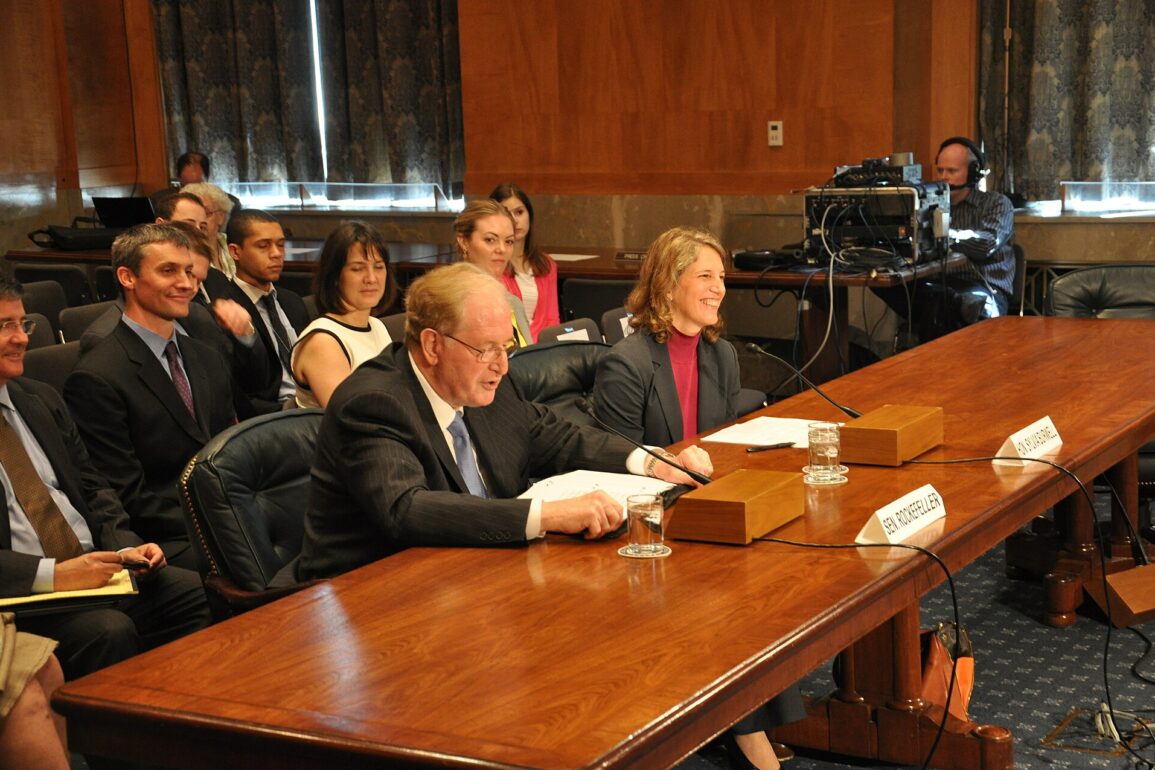
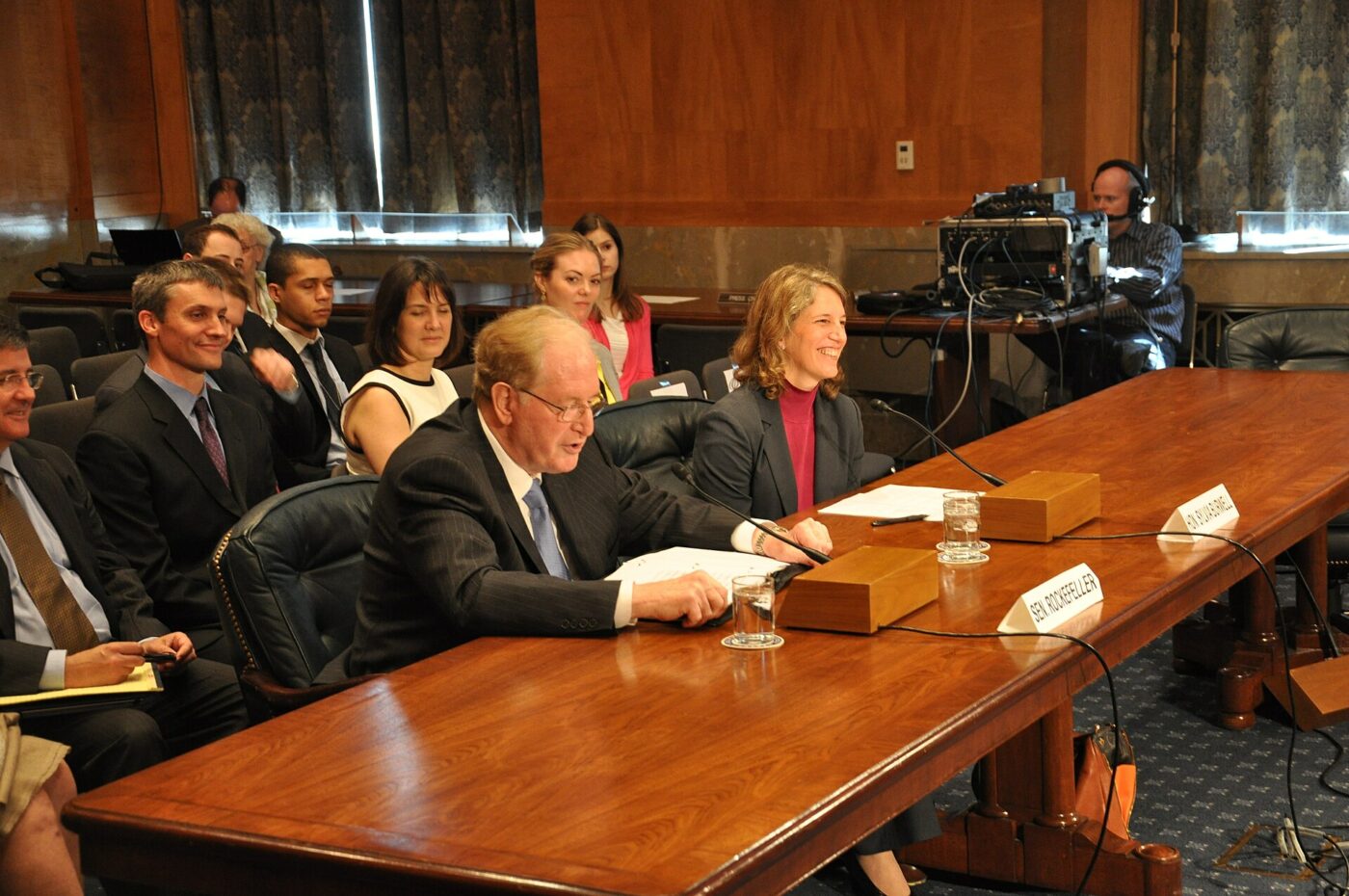
Jay Rockefeller, the former West Virginia governor and longtime U.S. senator who broke with his famous family’s Republican roots to become a Democrat, has died. He was 89.
Rockefeller died Thursday night at his home in Washington, according to Mary Stewart, vice president for external affairs at WETA, the public broadcasting station where his wife, Sharon, serves as president and CEO. He was the last member of the Rockefeller political dynasty to hold office, and the only Democrat among them.
Born John D. Rockefeller IV in New York City, he was the great-grandson of Standard Oil founder John D. Rockefeller, who died a month before his birth. His father, John D. Rockefeller III, was a well-known philanthropist. Two uncles, Winthrop and Nelson, served as Republican governors of Arkansas and New York, while another uncle, David, ran Chase Manhattan Bank.
Rockefeller took a different path. At 27, he moved to the West Virginia mining town of Emmons as a worker in the Volunteers in Service to America anti-poverty program. He later said the experience shaped every policy he pursued and every vote he cast.
What was supposed to be a short stay turned into a half-century career in one of the nation’s poorest states. Rockefeller won a seat in the state House of Delegates as a Democrat in 1966 and went on to serve as secretary of state.
His only political defeat came in 1972, when he lost the governor’s race to Republican Arch Moore Jr., father of current GOP Sen. Shelley Moore Capito, who would later win Rockefeller’s Senate seat. Rather than leave, Rockefeller stayed in West Virginia and became president of West Virginia Wesleyan College. After shifting his position to embrace strip mining, he won the governorship in a 1976 landslide and was reelected in 1980 in a rematch with Moore.
As governor, he focused on roads, sewers and bridges. In 1984, he won a U.S. Senate seat despite President Ronald Reagan’s landslide reelection that year, and he went on to serve five terms.
Rockefeller’s personal fortune, estimated at $150 million, was a constant theme in his campaigns. He spent at least $21 million of his own money on his races, including $9 million in his close 1984 Senate contest against Republican John Raese. During his 1980 race, bumper stickers urged Moore to make Rockefeller spend it all.
In the Senate, Rockefeller chaired the Commerce Committee, where he pushed consumer protections and broadband expansion. He wrote the 1997 law creating the Children’s Health Insurance Program and led the Veterans Affairs and Intelligence committees, often clashing with President George W. Bush on foreign policy. He later said he regretted voting to authorize the Iraq War.
Rockefeller also broke with the Obama administration on coal, joining other West Virginia officials in opposing EPA oversight of mountaintop removal mining in a state that ranks as the nation’s second-largest coal producer.
He also helped bring Toyota to Buffalo, West Virginia, where the automaker opened an engine parts plant in 1996. The $2 billion facility now employs about 2,200 workers.
Rockefeller retired from the Senate in 2015, saying he could not imagine a more rewarding career.